Be yourself; Everyone else is already taken.
— Oscar Wilde.
This is the first post on my new blog. I’m just getting this new blog going, so stay tuned for more. Subscribe below to get notified when I post new updates.
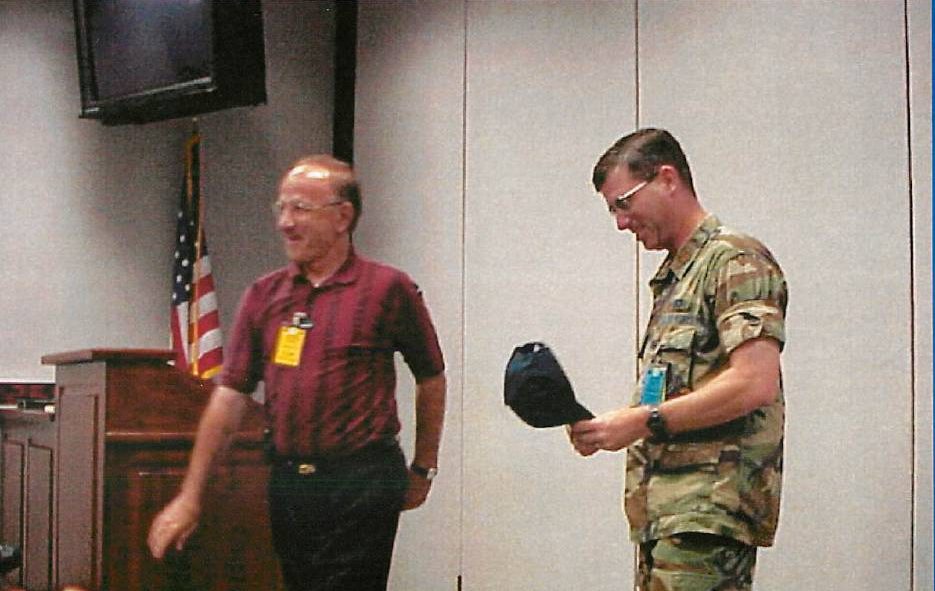
Dr. Tom Sadeghi | Aerospace electronics
Dr Tom Sadeghi has worked in various aerospace electronics at different posts like as an R&D Engineer in the Fairchild Republic, as Manager of advance flight control at General Electric Aircraft Control Systems.
Be yourself; Everyone else is already taken.
— Oscar Wilde.
This is the first post on my new blog. I’m just getting this new blog going, so stay tuned for more. Subscribe below to get notified when I post new updates.
The history of aviation is not only interesting but very important too, and there are several key events and developments that plot our path to commercial flight.
The Concorde
Although it ultimately proved an inefficient loss leader The Concorde is an important feature in aviation history. The first commercial supersonic mode of transport could travel the same distance as ordinary aircraft but in half the time making it very popular with jet-setting businessmen and high ranking politicians. Its main root was between Heathrow and JFK Airport in New York which it flew regularly from 1975 until its retirement in 2003. The Concorde suffered from economic issues for a long time and regular complaints from the public about noise pollution added to its problems until a Concorde aircraft crashed after take-off in Paris in July 2000, which practically solidified its termination.
The Boeing 747
The seminal commercial aircraft is without a doubt the Boeing 747, carrying between 416 and 524 passengers. It was the first wide-bodied aircraft used for commercial flights and over 1500 have been built so far. There are now a range of different Boeing 747s with cargo airliners, military command models and luxury planes operating in our skies. It is a bastion of trade based aviation and there’s not a better aircraft in production for business flying. Perhaps the most famous version is the VC-25 which is the selected model for Air Force One, used to transport the President of the United States and other important dignitaries around the world.
Radar
Several of the most important developments in aviation weren’t to do with the aircraft themselves but were subsidiary advances with technology. Radar is one such development, and the most significant. In 1917 Nikola Tesla invented radar to enable the British army to path and prepare for attacks during the Battle of Britain. 21st Century radar now serves to organise the high volume of air traffic, giving pilots the ability to fly in almost all weathers. Radar is one of the most important events in aviation because without it we wouldn’t be able to handle the thousands of aircraft in the sky day and night.
Sound Barrier Broken
In 1947 on the 14th of October A US Air Force Captain called Charles ‘Chuck’ Yeager became the first human to break the sound barrier. Flying the Bell X-1 plane faster than the speed of sound over the California-Nevada test range Charles Yeager reached a peak of Mach 1.06, or 700 miles per hour. Arguably this achievement is more of an aviation milestone than an industry development but it is certainly noteworthy.
The Jet Engine
Both the turbo fan and turbo jet engines transformed aviation because the made higher speeds and higher altitudes possible which propeller driven planes simply couldn’t achieve. In 1910 a Romanian man called Henri Coanda patented his designs for jet propulsion. Prior to Germany introducing the world’s first jet powered fighter plane – the Messerschmitt 262 during World War 2, Britain experimented a lot with jet engine technology. It wasn’t until 1952 that the first jet engine aircraft, called the De Havilland Comet, officially started commercial services.
Dr.Tom Sadeghi is the best Aerospace Consultant for more information or Updates follow his blogs.
Website:- https://tomsadeghi.wordpress.com
Blog:-https://drtomsadeghi.blogspot.com/
https://drtomsadeghi.law.blog/
https://drtomsadeghi.weebly.com/
https://drtomsadeghi.yolasite.com/
Whether you want to spend your time moving from one place to another, or you’re simply fascinated with the mechanics of aviation there are aviation programs that will let you fulfill that dream. Currently there are shortages of pilots and mechanics in aviation sectors globally creating many openings in these areas. However these aren’t just the only offerings from the aviation, there are aviation programmes that will allow you to explore many other opportunities that cater uniquely to your interests and talents. Here are the top seven jobs that the aviation industry offers us;
COMMERCIAL PILOT
This is the coolest profile you can hold in the aviation industry travelling and ferrying people from one place to another. Also the perk of having an office with a view is too salivating not to pursue a career as a pilot. There is a constant demand of pilots and the financial rewards of an established pilot is mouthwatering.
AIRCRAFT AND AVIONICS EQUIPMENT MECHANIC OR TECHNICIAN
If you have a knack of knowing what make things work this is the right profile for you. As technicians are required to evaluate flight data diagnose problems repair and replace components as needed, and inspect completed work.
AIR TRAFFIC CONTROLLER
Who said the sky was an open highway, in fact it can get busier than your streets at times and to keep it clear from any disaster comes in the air traffic controllers. Air traffic controllers coordinate air traffic by issuing landing and takeoff instructions. They also provide other essential information to the pilots from runway closures to weather updates, an air traffic controller is required to understand everything going on in their sphere of control.
AEROSPACE PROGRAM MANAGER
To be qualified for this role aspirants are required to hold a bachelors degree in aviation management from an esteemed institute offering aviation programmes in various degrees. In this role the personnel is expected to make sure that your airport or airline is meeting all rules and regulations, oversee hiring, and maintain overall efficiency within your company.
AVIATION SAFETY INSPECTOR
As the profile sounds, this inspector is responsible for overseeing the operation of aircraft, which is one of the two roles an inspector holds. The other who specialize in air worthiness evaluate mechanics, repair facilities, and training programs for mechanics. Applicants should have previous experience as a pilot, navigator, repairman, or other aviation professionals.
FLIGHT INSTRUCTOR
If you are an experienced pilot and have amassed a great deal of time in the air can become an instructor in institutes where professional flight training is offered as an aviation program. Unlike regular pilots with a cramped up schedule, instructors enjoy a flexible schedule.
FLIGHT ATTENDANT
It’s an ideal career choice who loves the skies or want to taste the profession with a minimal educational commitment. As this is one of those jobs that don’t require a degree. The greatest draw of this profession is the opportunity to travel.
The SAA is a premier establishment in nurturing aviation professional who can efficiently deliver in all situations and display professionalism. We at SAA stay ahead of time to cope with the developments taking place in the civil aviation industry.
Dr.Tom Sadeghi is the best Aerospace Consultant for more information or Updates follow his blogs. http://tomsadeghi.yolasite.com
https://tomsadeghi.wordpress.com
Have you ever dreamed of becoming a Commercial Pilot? There’s always a need for qualified commercial pilots and it can be a fun and rewarding career. The first step in becoming a commercial pilot is obtaining your Private Pilot’s Certificate. This can be done at your local airport. There are many flight schools that offer flight training. It’s best to do an internet search or visit your local airport and see what flight schools exist. They can give you a breakdown of the cost to obtain your certificate.
To become a Private Pilot the basic requirements are you must be at least 17 years old, you must pass a written and practical (flight test). You’ll also need to pass a medical exam and hold at least a third class medical certificate. Later, you will need to earn a second class medical certificate to obtain your commercial certificate. In terms of flight training, to receive your Private Pilot Certificate you’ll need a minimum of 40 hours total time of flight training. Usually your flight training is done in a Cessna 172, which is a four seat aircraft. These planes have long been the choice of flight training because of their stable flight characteristics and ease of learning to operate.
Once you complete your training and pass your tests, you’re free to fly with friends, go on trips and share expenses of fuel, but you can’t be paid to fly yet. This is the time that most aspiring build flight time by doing as much flying as they can. The next step is to obtain your Instrument Rating. This rating will allow you to fly in the clouds without outside visual references. This is not absolutely necessary to obtain your Commercial Pilot Certificate but is required if you want to fly with airlines or most other air carriers. The instrument rating is special training to teach you to fly by only using the flight instruments in the plane.
To become a Commercial Pilot you’ll need to have your Private Pilot’s Certificate, be at least 18 years old and have at least 250 hours of total flight time. You’ll need additional training from an instructor and to pass another written and flight test. Once you get this license you can now be paid for certain types of flying, like banner towing, agricultural flying and aerial photography, but you still aren’t able to fly as a flight crew member for an airline. To do this, you need to build up a lot more flight time; typically 1500 hours. You can build up time by becoming a flight instructor, which requires more training and certifications.
Once you have the hours needed, you’ll need to obtain your Airline Transport Pilot certificate (ATP) and a first class medical certificate. The ATP is what allows you to work as a flight crew member in scheduled airline operations. You must also be at least 23 years old, read, write and speak English and be of good moral character. So becoming a Commercial Pilot is hard work and takes dedication, but once you reach your goals the possibilities for flying jobs is endless. You can be a charter pilot, airline pilot, tour pilot and more.
Dr.Tom Sadeghi, Massachusetts is the best Aerospace Consultant for more information or Updates follow his blogs.
Website:- https://tomsadeghi.wordpress.com
Blog:-https://drtomsadeghi.blogspot.com/
https://drtomsadeghi.law.blog/
There are wide ranges of services that an aviation consultant offers to the aviation sector. Whether it is engineering to advisory services, an aviation consultant is given the responsibilities of all. The aviation consultant should be knowledgeable, and he should be updated with the current market trends that are happening in the aviation sector. An aviation consultant should have good analytical skills that are necessary to interpret different information in order to make future recommendations to the clients. In addition, an aviation consultant should be a good communicator so that he can make his instructions and recommendations clear to his clients.
Dr. TomSadeghi is a specialist in the Aviation sector, and he holds good knowledge of Aerospace electronics, Command, and Control Architecture, Flight and Jet Engine, and Critical Systems and Computers. Throughout his life, Tom Sadeghi lived in New York, and now he has shifted to the great city of Boston, offering his services to the nearby located aerospace electronics companies. Tom Sadeghi has a huge 30 years of experience of working in different aerospace industries. He started his career working as a Computer and Control engineer and progressed as manager of advanced flight control in the department of General Electric Control Systems. He has also worked as a technical Director for First Air Force. Throughout his career, Dr. Tom has worked for various posts like R&D Engineer in the Fairchild Republic, Program Manager for X33 vehicle monitoring system for Lockheed Martin, and Manager of Advance flight control in General Electric Aircraft Control systems. Dr. Tom has provided his services as an aviation consultant for many aviation companies like ARINC, MacDonald-Douglas, Northrop-Grumman, and Allied Signals.
Tahmouress Sadeghi worked as a technical lead in First Air Force. He started working in ACTD (Advanced Concept Technology Demonstration) a year before the attack of 9/11. Just after a day of the attack, the ACMD system was deployed. Tom Sadeghi, Massachusetts, along with his team, contributed to transforming the ACMD system to Integrated Air Defense Systems. Tom is one of the best aviation consultants that any aviation company can get. He knows his responsibilities well and understands the expectations of his clients. Because of his hard work and dedication, tom produces the results that his clients expect him to.
Website:- https://tomsadeghi.wordpress.com
Blog:-https://drtomsadeghi.blogspot.com/
https://drtomsadeghi.law.blog/
https://drtomsadeghi.weebly.com/
https://drtomsadeghi.yolasite.com/
Aviation consultancy is a job that requires a lot of attention and experience. An aviation consultant needs to have good interpersonal and communication skills. Due to the ever-changing nature of the aviation sector, the experts involved in the industry need to have the apt knowledge and skills to accommodate the changes happening in the sector. To make good recommendations to the clients, an aviation consultant should have great analytical skills. As the job of an aviation consultant involves broad responsibilities like engineering and designing, he should be properly qualified for the job.
Dr. Tom Sadeghi has more than 30 years of experience in working in multiple aerospace industries in the States. He started working as a computer and control engineer initially but later on progressed to the rank of manager in advance flight control in General Electric Control Systems and department. Tom Sadeghi worked as a technical lead for First Air Force and contributed hugely for the development of Area Cruise Missile Defense under the First Air Force Initiative called Advanced Concept Technology Demonstration (ACTD). Tom Sadeghi, Massachusetts, started working in ACDT a year before the 9/11 attack. A day after the attack, the ACMD system was deployed. Dr. Tom also contributed to the transformation of the ACMD system into Integrated Air Defense Systems (IADS).
Dr. Tom has worked for many different companies in his career, including MacDonald Douglas, Garrett Engine, ARINC, Allied Signals, and Northrop-Grumman, etc. He contributed significantly while working in these companies. The nature of work that an aviation consultant needs to do requires a lot of expertise and experience. Dr. Tom is not only an experienced aviation consultant, but he is a very understandable man. He first discusses what his client needs before undertaking any project. His work is top-notch, and his services are extraordinary. Tom has great knowledge about the aviation sector, and he likes to work with dedication. He has now shifted to the great city of Boston, where he will be sharing his expertise with the aviation industries.
Website:- https://tomsadeghi.wordpress.com
Blog:-https://drtomsadeghi.blogspot.com/
https://drtomsadeghi.law.blog/
https://drtomsadeghi.weebly.com/
https://drtomsadeghi.yolasite.com/
Due to the constant changes in the Aviation sector, the need for an aviation consultant is felt. Experts are needed to resolve the issues present in the aviation sector. A god aviation consultant should have experience of many years working in the sector. Tom Sadeghi is one of the best aviation consultants who have a doctorate degree in computer and electrical engineering from Rensselaer Polytechnic Institute. Tom Sadeghi, Massachusetts, has seven years of academic experience in addition to 18 years of working for aerospace defense industries.
Dr. Tom Sadeghi has spent most of his life in New York, and very recently, he has moved to Boston, where he intends to serve the aviation sector with his experience and expertise. Dr. Tom has worked for a vast 30 years in the aviation sector in States. Initially, he worked as a computer and control engineer and later on proceeded as a manager of flight control.
Dr. Tom Sadeghi has worked in many posts like R&D Engineer in the Fairchild Republic, program manager for X33, Manager of advance flight control, etc. Tom Sadeghi has also worked for many companies like Garrett Engine, MacDonald-Douglas, Boeing Military, and Commercial and ARINC.
Tahmouress Sadeghi was a technical head in First Air Force, where he contributed to the development of Area Cruise Missile under his First Air Force Initiative. The First Air Force Initiative started a year after the 9/11 attack, and few days after the attack, the Area Cruise Missile Defense was deployed. Since then, Tom Sadeghi has served as technical lead in First Air Force. Along with his colleagues, he worked in the transformation of the ACMD system into Air defense systems (IADS). Keeping the needs of his clients’ minds, Tom Sadeghi provides his services. He is one of the best aviation consultants in the sector. After taking the assessment of the case, Dr. Tom plans and performs accordingly so that he can serve his company in a better way.
For More Information or services contact Dr. Tom Sadeghi.
Website:- https://tomsadeghi.wordpress.com
Blog:-https://drtomsadeghi.blogspot.com/
https://drtomsadeghi.law.blog/
The aviation sector is constantly changing, which is why they need an aviation consultant is much felt. For resolving the issues in the aviation sector, experienced professionals are needed. Aviation consultants should have good years of experience and expertise. Dr. Tom Sadeghi is one of the best Aviation consultants having a doctorate degree in electrical and computer engineering from Rensselaer Polytechnic Institute. He also has 7 years of experience in academic teaching along with 18 years of working in aerospace defense industries.
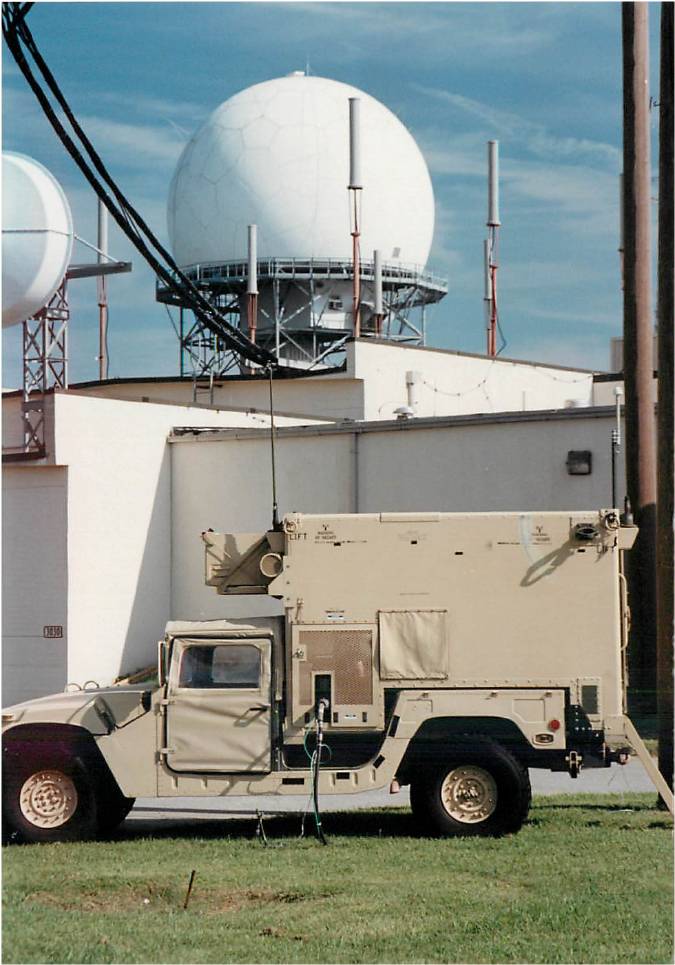
Dr. Tom Sadeghi has lived in New York for most of his life and has recently moved to Boston, where he will be sharing his experience with the local aerospace companies. Dr. Tom Sadeghi has worked for 30 years in the various aerospace industries in the States. He initially started working as a Control & Computer engineer and proceeded as a manager of advance flight control.
Dr. Tom Sadeghi has worked in various aerospace electronics at different posts like as an R&D Engineer in the Fairchild Republic, as Manager of advance flight control at General Electric Aircraft Control Systems, as program Manager for X33 at Lockheed Martin X33 spacecraft. Tom Sadeghi, Massachusetts has worked for many great companies like ARINC, Garrett Engine, MacDonald-Douglas, Northrop Grumman, and Boeing Military and commercial.

Dr. Tom Sadeghi was a technical lead in First Air Force, and he contributed to the development of an Area Cruise Missile Defense (ACMD) under the First Air Force Initiative. The work started one year before the 9/11 attack, and just after one day of the attack, the ACMD system was deployed. Dr. Tom Sadeghi has served as a technical lead for First Air Force since then. He worked with his colleagues in the transformation of the ACMD system into Integrated Air Defense Systems (IADS).
Dr. Tom Sadeghi is a great aviation consultant who ensures what his client needs and keeping that in mind, he provides his services. After getting contracted, Dr. Tom Sadeghi performs a case assessment of his company and makes a plan accordingly that serves the company in the best manner.
For More Information or services contact Dr. Tom Sadeghi.
Website:- https://tomsadeghi.wordpress.com
This is an example post, originally published as part of Blogging University. Enroll in one of our ten programs, and start your blog right.
You’re going to publish a post today. Don’t worry about how your blog looks. Don’t worry if you haven’t given it a name yet, or you’re feeling overwhelmed. Just click the “New Post” button, and tell us why you’re here.
Why do this?
The post can be short or long, a personal intro to your life or a bloggy mission statement, a manifesto for the future or a simple outline of your the types of things you hope to publish.
To help you get started, here are a few questions:
You’re not locked into any of this; one of the wonderful things about blogs is how they constantly evolve as we learn, grow, and interact with one another — but it’s good to know where and why you started, and articulating your goals may just give you a few other post ideas.
Can’t think how to get started? Just write the first thing that pops into your head. Anne Lamott, author of a book on writing we love, says that you need to give yourself permission to write a “crappy first draft”. Anne makes a great point — just start writing, and worry about editing it later.
When you’re ready to publish, give your post three to five tags that describe your blog’s focus — writing, photography, fiction, parenting, food, cars, movies, sports, whatever. These tags will help others who care about your topics find you in the Reader. Make sure one of the tags is “zerotohero,” so other new bloggers can find you, too.

 Dr. Tom Sadeghi | Aerospace electronics